Everything is energy. That is a favorite saying of mine. Our existence is an interconnected web of quantum fields. One of these fields is sound — and sound can either help or harm. Sound therapy is becoming more helpful in today’s world.
So, here are the basics of what sound therapy is…
To understand the basics of sound therapy it’s important to understand what sound IS.
Sound is a mechanical wave that travels through a medium—such as air, water, or solid materials—caused by a vibration.
When an object vibrates, it basically shakes up the surrounding medium, which creates a disruptive pattern that moves outward. When these waves reach our ears, we interpret them as sound.
Sound affects the body and mind because it interacts with physical and psychological processes.
Singing bowls, as traditional sound instruments, harness these properties to produce resonant sound that are calming, and therapeutic.
Key properties of sound waves include:
- Frequency: This determines the pitch of the sound. The higher the frequency the higher the sound.
- Amplitude: This is the loudness of the sound—More amplitude = louder sounds.
- Resonance: This is where an object vibrates at a particular frequency, amplifying the sound waves of that frequency.
Sound Therapy & The Body-Mind-Spirit Connection
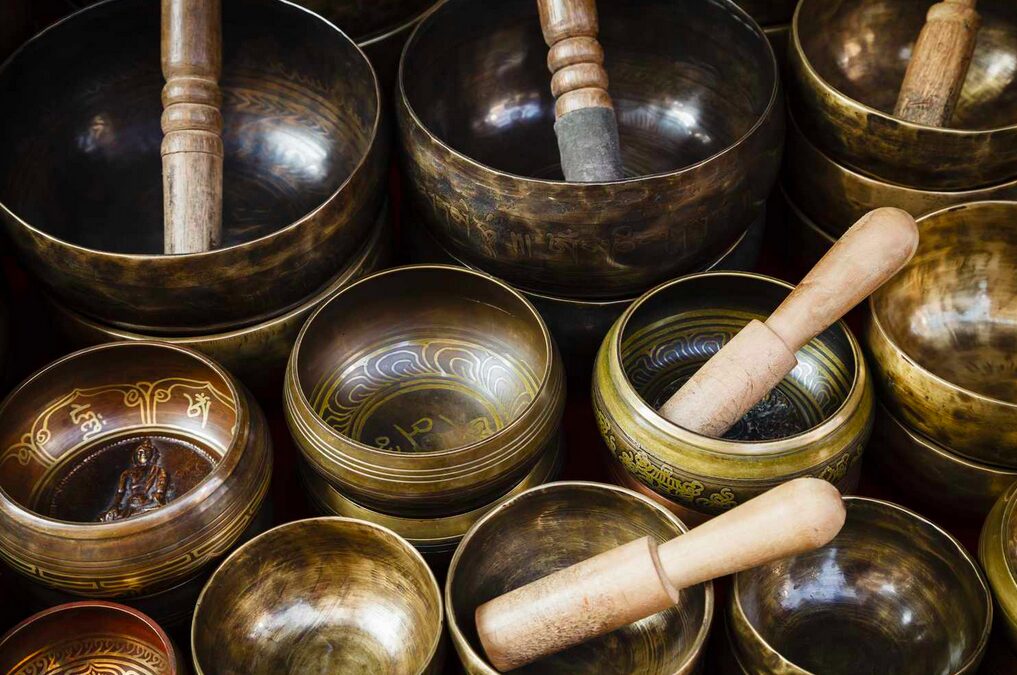
Typically made of metal or crystal, singing bowls produce sound through vibration. The science of how these bowls work can be broken down into a few key concepts:
When a singing bowl is played, it produces a pure tone with multiple frequencies.
These frequencies blend together to create the complex, layered sound which unique to singing bowls.
The harmonics are essential to the bowls’ rich and soothing sound quality.
Each harmonic contributes a different frequency. So the balance between them creates the meditative, resonant tones conducive to sound therapy.
The soothing sounds of singing bowls have been widely used for meditation, yoga, and sound healing.
What exactly is the connection between sound therapy and the human body?
The vibrations produced by singing bowls can interact with the human body, which is composed mostly of water.
Water is an excellent conductor of sound vibrations.
When exposed to positive sound frequencies, the body’s cells resonate which promotes relaxation, reducing stress, and encouraging healing.
This phenomenon is what is known as vibrational healing or sound therapy.

Singing Bowls & Brainwave Entrainment
Sound waves can influence brainwave patterns negatively or positively.
Known as entrainment.
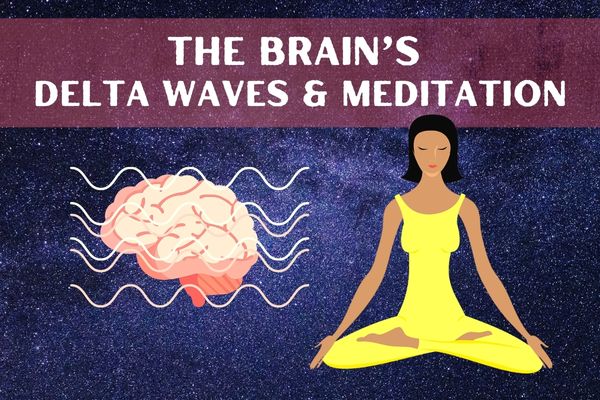
It’s believed that certain frequencies encourage specific positive states of brain activity:
- Delta waves (0.5–4 Hz): Associated with deep sleep and restoration.
- Theta waves (4–8 Hz): Linked to meditation, creativity, and emotional balance.
- Alpha waves (8–14 Hz): Deeply relaxing and calming.
In Use Today – How Singing Bowls Affect Us Now….
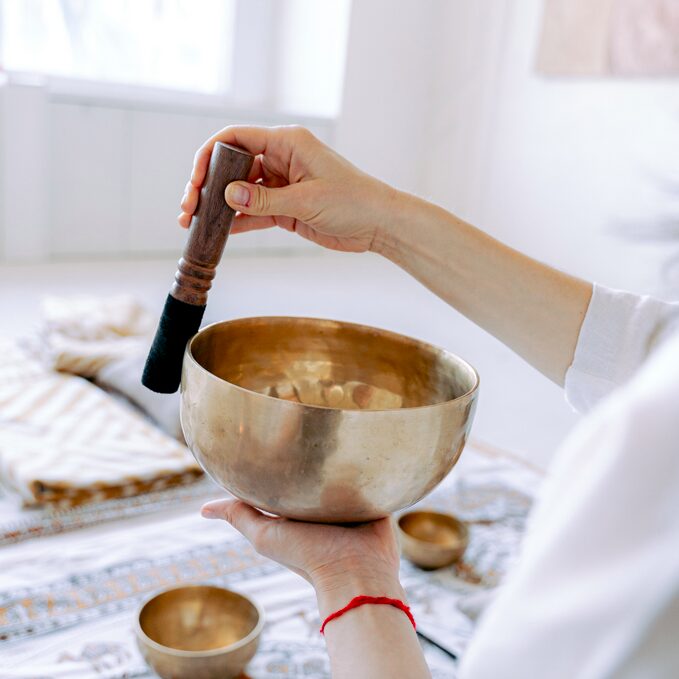
Singing bowls are very simple and easy to use. The practitioner uses a cushioned mallet to strike the bowl and then circle the rim of the bowl with it — creating sound.
Singing bowls are popular in places where they practice:
- Meditation and Yoga
- Sound Therapy and Healing Sessions
- Educational Therapy for Those with Sensory Challenges (such as autism)
The use of singing bowls combines ancient practices with modern understandings of sound science and psychology.
While people tend to use singing bowls as nice instruments for meditation, they are in fact, instruments of real healing.
Singing bowls can help to repair much energetic damage in our energy fields (aura) and psychology. This is the case whether you’re a seasoned meditator, new to sound therapy, or a science enthusiast.
Singing bowls are actually one of — if not THE best way — to experience sound therapy.
They are ancient instruments that help us heal the mind, body, spirit connection.
AND…
Interested in alternative therapy? — I have been in the holistic/alternative therapy field for decades.
Discover more about my services here…
Fall Asleep With Me & 1000s of Others On INSIGHT TIMER & The AURA APP