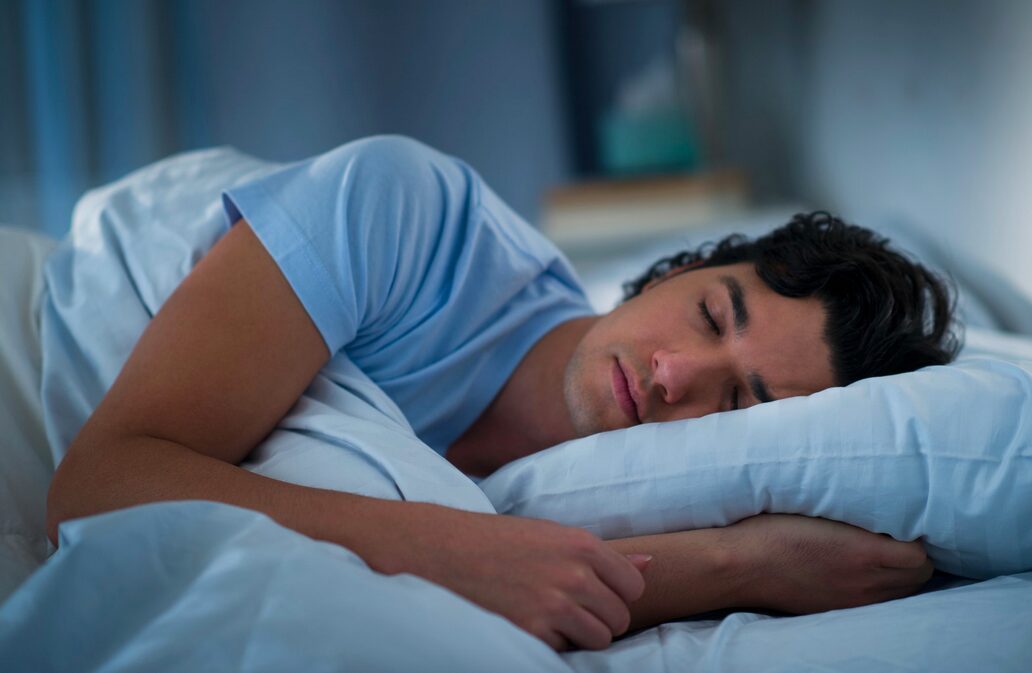
I didn’t realize this, but even after decades of research, scientists are still puzzled as to exactly why we sleep.
So like any good scientist would, they put sleep through their control tests by asking 2 questions;Question #1 – How Does Sleep Work?
AND
Question #2 – What Happens When We Don’t Get Enough Sleep?

Studies show sleep has effects on virtually all systems of the body. Multiple parts of the brain produce hormones and chemicals that regulate sleep and wakefulness. There is more work to do, but so far, research reveals how sleep is connected to physical, emotional, and mental health.
So, here are some short answers to these two research questions.
QUESTION #1
How Does Sleep Work?
In very modern terms, sleep can be thought of our body’s night time scheduled maintenance for a shutdown of functions, a deep-clean and a software update.
The Two Main Systems Running During Sleep Are;
1. Circadian Rhythm
Your circadian rhythm runs on about a 24-hour cycle. It’s controlled by a tiny area of the brain. It responds to light and dark and tells your body when to feel sleepy or alert. The multiple maintenance functions that are at work while we sleep, happen in repeating cycles of about 90-110 minutes.2. Sleep Pressure
The longer you’re awake, the more the pressure builds up to sleep. It’s caused by chemicals accumulating in your brain. Sleep clears out these chemicals.
QUESTION #2
What Happens When We Don’t Get Enough Sleep?
After just a couple of nights of bad or fitful sleeping you’ll experience;
- Slower thinking
- Difficulty focusing
- Random forgetfulness
- Poor judgement
- Emotional overreactions
- Increased irritability and general anxiety
- Lower stress tolerance
- Less emotional intelligence
- Slower reaction time (similar to being mildly drunk)
- Lower pain tolerance
- Weaker immune response
- More inflammation
- Strong cravings for sugar and carbohydrates
- Higher blood sugar and insulin resistance
- Learning new things becomes harder
- Creativity drops
- And if your sleep is impaired long enough you won’t realize how ‘out of it’ you really are
- Increased risk of heart disease, stroke, type 2 diabetes, obesity and dementia
- Consistent depression & anxiety
- Toxic proteins build up in the brain
- Immune system stays chronically weakened
- Stress hormone (cortisol) stays elevated while testosterone and growth hormone drop causing excessive stress on internal organs

Additionally, people don’t just “get used to it”
It’s true that you can train your body to need less sleep just like you can train it to need less food.
However, just gritting your teeth and getting through it is not a way to ‘train’ your body to be more efficient and to sleep more deeply.
In my opinion, I believe shorter nights of deep sleep are a ‘spiritual’ thing — much like fasting takes humans to higher spiritual realms because there is less density of the physical body — so too for sleep.
The higher your ‘spiritual’ energy, the less sleep you need. This is because a high level of consciousness sustains the physical body.
What I’m describing here is a long ongoing process. It’s not meant to be tackled inside of a few weeks or months.
The good news is that a single good night of sleep can:
- Improve mood
- Boost immune function
- Sharpen attention
Sleep debt is mostly recoverable with some time. It’s like any other stressor. The body needs time to heal.
So, those are the basics of sleep which are so vital live a successful life.If you’ve a top leader or decision maker looking to get the most out of your ability to make decisions, this is the kind of information that can help you do that.
Find me on Substack at Necessary Heresy and discover what the Responsible Rebellion is all about…