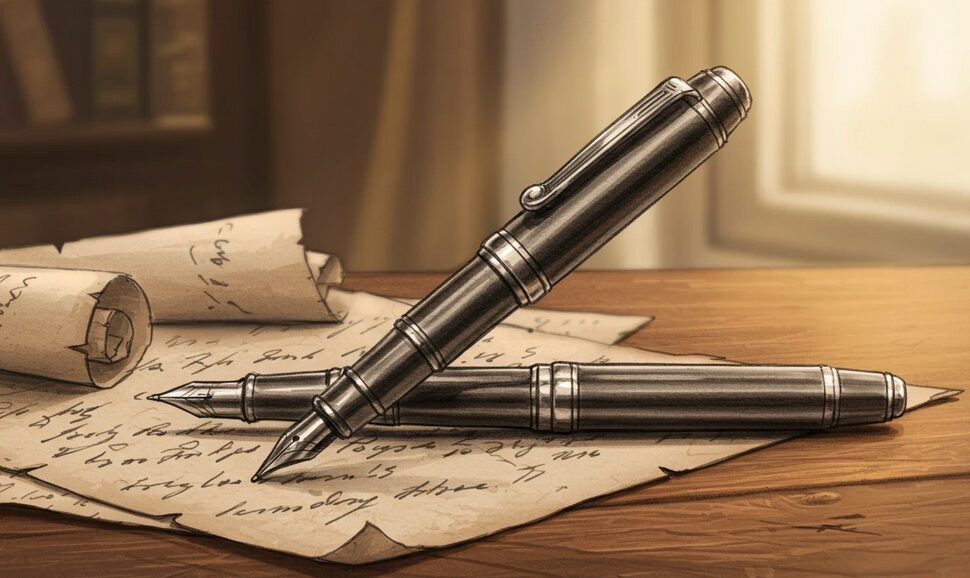
The history of the pen in the United States is linked to the broader development of pen technology globally.
Here’s a short timeline:
- Early 19th century – Dip pens: In the early 1800s, people in the new America primarily used quill pens. Metal nibs began to appear around the 1820s–1830s often imported from Europe. These were quickly adopted as they were more durable and had finer writing.
- Mid-19th century – Steel nib pens: By the 1840s–1850s, steel nib pens were mass-produced in the U.S. Especially, in cities like Boston and New York. Companies like John Mitchell & Co. imported and eventually manufactured steel nibs domestically.
- Late 19th century – Fountain pens: The first practical fountain pens started appearing in the 1880s. Lewis Waterman, in 1884, patented a reliable capillary-feed fountain pen in New York City, which is often considered the birth of the modern fountain pen in the U.S.
- 20th century – Ballpoint pens: Ballpoint pens became widely available in the U.S. in the 1940s–1950s, after World War II. This was following their invention by László Bíró in the 1930s.
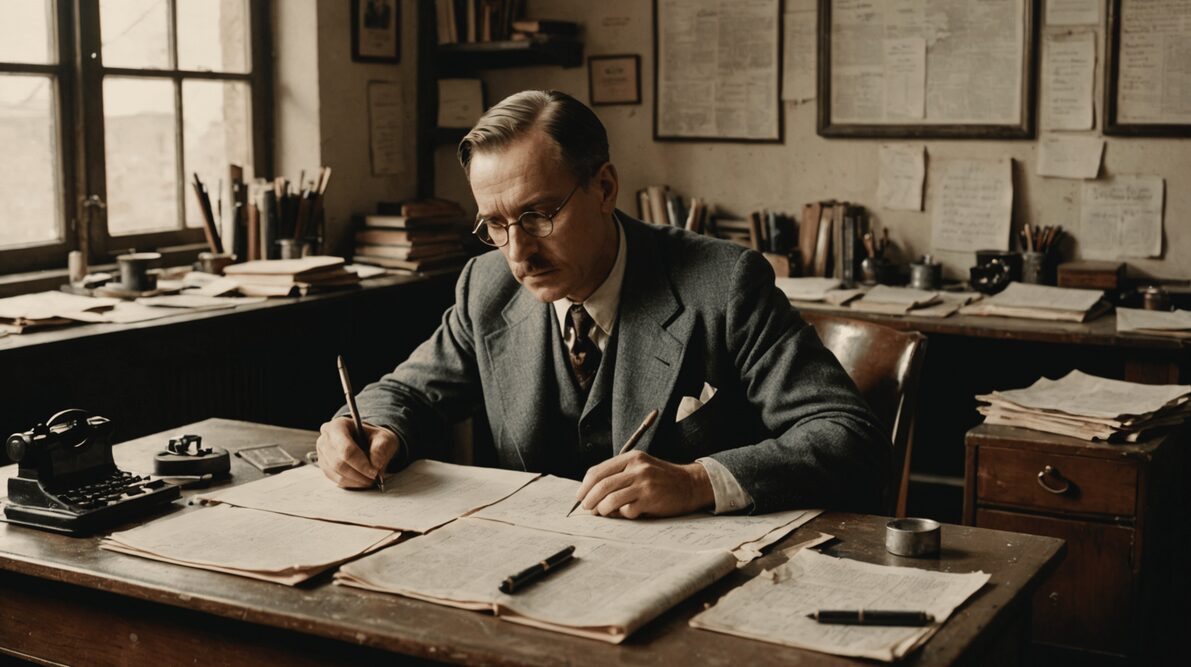
So, while writing instruments like quills were used since colonial times, the modern “pen” as we think of it—fountain pens—emerged in the U.S. around 1884 with Waterman’s innovation.
The ballpoint pen was invented by László Bíró, a Hungarian-Argentine journalist, in 1938. He patented a design that used quick-drying ink and a tiny rotating ball to dispense it.
In the U.S., commercial availability came later. During World War II (1940s), the U.S. military tested and used ballpoint pens. This was to check for their ability to write reliably in extreme conditions.
The first major commercial sale of ballpoint pens in the U.S. was in 1945–1946. Shortly after WWII.
It was The Eversharp company, which licensed the patent and sold the pens under the “Eversharp” brand. Initial prices were about $12.50 per pen, which was expensive at the time. That’s the equivalent to roughly $180–$200 today.
This was because of the precision manufacturing. The tiny ball-and-socket mechanism required very fine units. Which was hard to mass-produce cheaply at the time.
The Ink formulation was a quick-drying viscous ink and more complex than fountain pen ink. It had to flow smoothly without clogging so it took longer to produce properly.
Additionally, The original patents were controlled, so production was limited to licensed companies, keeping supply low and the demand high.
Influences On The Pen
- During the war, the U.S. military used ballpoint pens because fountain pens would leak at high altitudes.
- Soldiers liked using the ball point pen, which created consumer awareness and demand after the war.
- By the late 1940s and early 1950s better manufacturing developed. They found cheaper ways to produce the tiny rolling ball and the pen tip.
- Multiple companies sprung up including Parker, Sheaffer, and later Bic (from France). This increased competition in the U.S. market and lowered prices.
- The use of plastic barrels for the pens instead of metal cut production costs drastically.
By 1950–1952, ballpoint pens became affordable to the general public, often priced under $1.
The ballpoint pen started replacing fountain pens in offices, schools, and homes.
FUN FACT: Early marketing played a huge role too. Advertisements in the late 1940s emphasized “no smudges, no leaks, write anywhere.”
This made the pen seem more like a modern miracle rather than just a new tool.
Thanks for reading/listening. I wish you a very prosperous day, Renee
Contact – thewritersnexus@gmail.com
Fall Asleep With Me & 1000s of Others On The AURA App





CONTACT RENEE